
Approx. Reading Time: 8 to 9 minutes
Is Japan vegan friendly? Yes, increasingly it is, especially in larger cities like Tokyo, Kyoto and Osaka. But it isn’t as simple as ordering the vegetarian option and assuming everything’s fine.
The main obstacle isn’t finding vegetables, tofu or rice. It’s knowing what’s in the stock, sauce or seasoning. A dish can look completely plant-based and still contain fish-based dashi, bonito flakes, egg, dairy or honey.
That’s why vegan travellers come home with differing impressions of Japan. Some say it’s almost impossible. Others say that Japan has an abundance of tofu and rice and wonder what all the fuss was about. Honestly, neither version is quite right.
Japan is manageable for vegan travellers, and it can be a brilliant place to eat. You just need to know where problems usually appear and plan a little more carefully outside the major cities.
And remember, you’ve travelled thousands of miles to visit an amazing country with an incredible history. Try not to make it only about the food. Once you know what to look for and expect, Japan is a wonderful place to eat. Here’s what to watch for, and how to eat well without letting your meals dictate your journey.
So, is Japan vegan friendly?
In the larger cities, yes.
Tokyo, Kyoto and Osaka all have dedicated vegan and vegetarian restaurants, including vegan ramen.
Tokyo’s official tourism site publishes a Tokyo Vegan & Vegetarian Restaurant Guide, and Kyoto has its own vegan food guide, so you’re not starting from scratch.
Japan’s own tourism board also publishes a vegetarian guide, if you want the national overview.
Outside the cities, it’s a little less straightforward. Menus aren’t always in English, restaurants may be less familiar with vegan requirements, and traditional inns usually need notice before they can prepare a suitable meal.
That doesn’t mean you should give the smaller destinations a miss. Far from it. Kanazawa, Hiroshima, Nara and Miyajima are all worthwhile places to visit, and they’re all on our own Vegan Japan tour. They just need a little extra preparation.
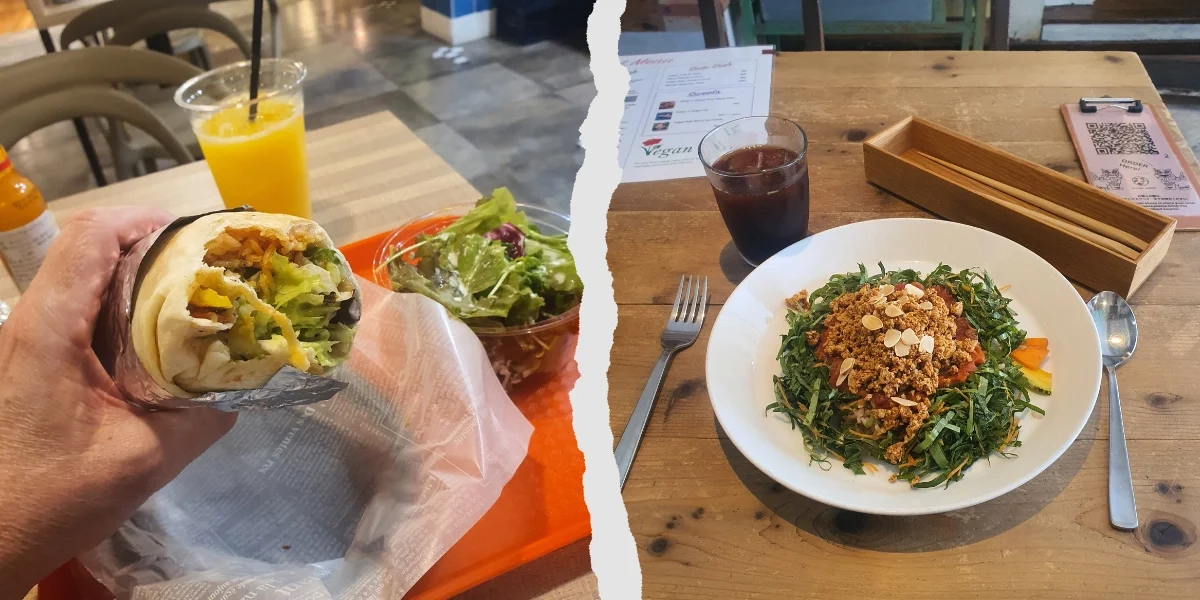
The real problem is fish stock, not meat
Ask most vegans what worries them about Japan and they’ll say meat. Meat is the easy part, because you can usually see it. The more difficult ingredient is dashi.
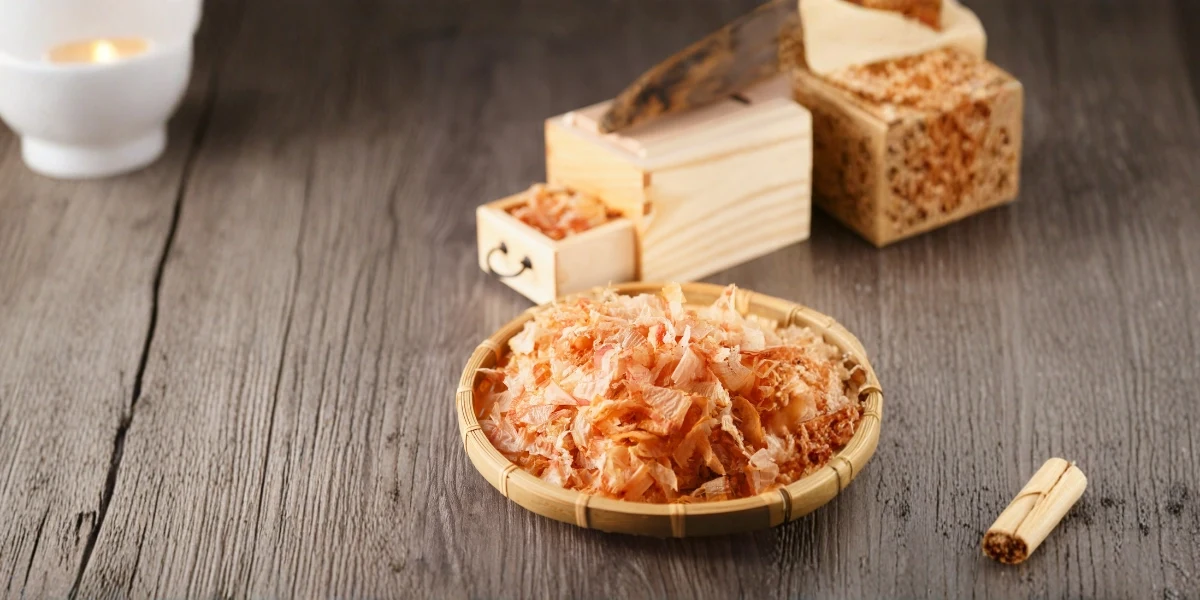
Dashi is the stock behind a huge amount of Japanese cooking. It’s often made with katsuobushi (dried bonito flakes) or niboshi (small dried sardines). Kombu (kelp) and dried shiitake mushrooms can make a plant-based dashi, but unless you’re told that’s what was used, it’s safest to assume fish.
Dashi turns up in places you might not expect:
- miso soup
- udon and soba broths
- dipping sauces
- simmered vegetables and tofu
- tempura dipping sauce
- sauces served with packaged natto
- bonito flakes sprinkled over tofu, okonomiyaki and other dishes
The word “vegetarian” doesn’t always communicate that well in Japan. It’s an imported word and is often understood more loosely. Simply asking for a vegetarian meal may not get the intended result, and saying “no meat” may be understood literally, with fish stocks or other animal-based sauces still being included.
Eggs, dairy, honey and gelatin can also appear in sauces, sweets and baked goods. Vegetarian okonomiyaki, for example, will probably still contain eggs.
The fix is to be specific, which is actually easier than it sounds.
What to say when ordering
Be clear and specific about everything you don’t eat. Explain that you don’t eat any meat, fish, seafood or animal products, including fish stock and dashi.
If staff seem unsure, stay calm. Showing frustration usually won’t get you anywhere, so explain that “no meat” also means no chicken, pork or fish. What looks like reluctance is often just a genuine misunderstanding. If in doubt, “Spell it out!”
A written card or translation tool is often more useful than trying to explain everything while a queue forms behind you. Take screenshots before you fly, so you can use them without a Wi-Fi signal.
- “I’m vegan.”
私はヴィーガンです。
(Watashi wa vīgan desu.) - “Does the stock contain fish?”
だしに魚を使っていますか?
(Dashi ni sakana o tsukatte imasu ka?) - “No bonito flakes, please.”
かつお節なしでお願いします。
(Katsuobushi nashi de onegaishimasu.)
For set menus, tell the restaurant when you book, not when the first plate arrives. The same goes for a ryokan or a temple stay.
One important note. If you have an allergy, a vegan explanation isn’t a substitute for an allergy warning. Get allergy wording checked by a fluent Japanese speaker before you travel.
What’s easiest to find?
Dedicated vegan restaurants
In the big cities, this is the simplest option. Tokyo’s official guide sorts restaurants into categories, and the first is entirely vegan-friendly. Many vegan and vegetarian restaurants display a sticker from the Japan Vegan Society, VegeProject Japan or the Japan Vegetarian Association, and you may also see JAS certification, Japan’s official standard for vegetarian and vegan food since 2022.
Restaurants open and close, and menus change, so check HappyCow’s recent reviews and the restaurant’s own page before you cross town for one meal.
Everyday dishes worth looking for
Some Japanese dishes are often plant-based or can be adapted, including vegetable tempura, pickled vegetables, tofu, tofu skin, nasu dengaku, zaru soba, cucumber sushi and pickled daikon sushi.
Even these deserve a quick check though. Tempura and soba usually come with a dipping sauce, and that’s commonly made with dashi, so ask for salt or another option. Tempura batter can also contain egg.
Temple food
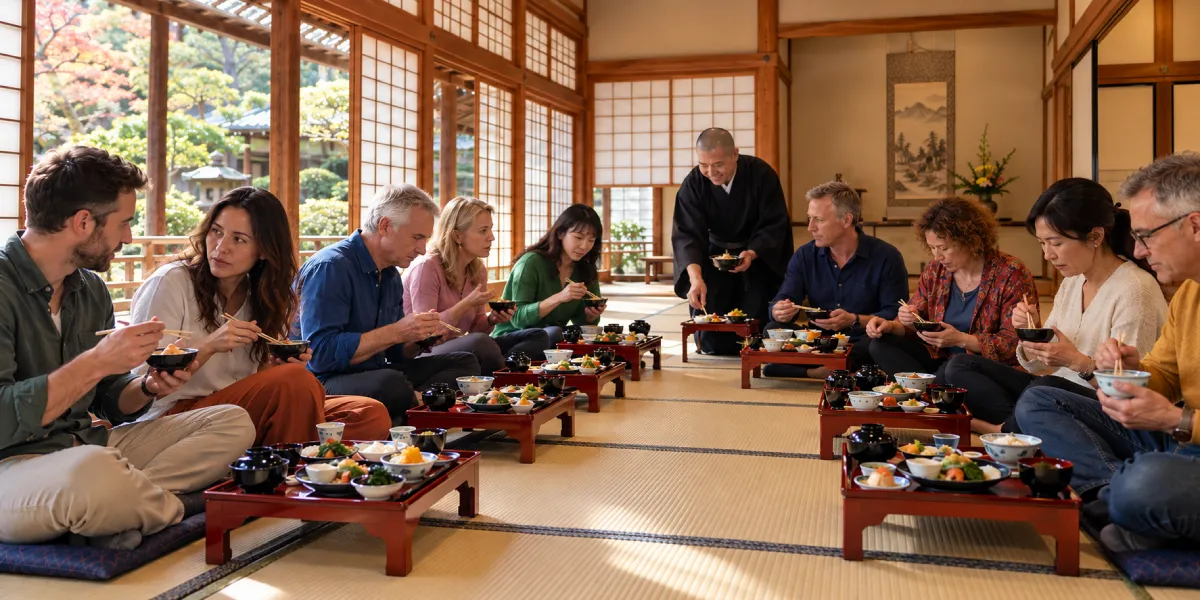
Shojin ryori is the traditional cuisine associated with Buddhist temples and is traditionally vegan. It can be a memorable part of a Japan trip, particularly around Kyoto or during a temple stay.
Still check when booking though. Modern temples may use dairy, and Kyoto’s own guide says dishes may contain fish-based dashi, eggs or honey. Confirm the details when you book.
Convenience stores
Japanese convenience stores are well worth a look, and they make a surprisingly good backup, especially for travel days or munchie moments.
Many onigiri (rice balls) are filled with fish, but there are usually umeboshi (pickled plum) and kombu options. Edamame, packaged beans, simple salads and inarizushi (rice in a tofu pocket) are also worth looking for.

Eating well outside the major cities
Smaller places do take more planning, but they’re far from impossible.
Take Kanazawa. Its Omicho Market has been one of Ishikawa’s top seafood markets for 300 years. That doesn’t mean there’s nothing for you, but it’s worth knowing where you plan to eat before you arrive.
Hiroshima is similar, with Okonomiyaki as the local favourite. The city’s official guide notes that Okonomiyaki contains egg and meat, but it also lists restaurants that cater for vegetarians and vegans.
Nara and Miyajima reward preparation too, especially if you’re visiting temples, staying somewhere traditional or arriving late in the day.
In rural areas, a ryokan (traditional inn) may be able to prepare a suitable vegetarian or vegan meal if you contact them ahead with your dietary needs. Just don’t leave it until the last minute.
A simple routine before you go
You don’t need to plan every mouthful of a trip to Japan. Six habits should cover most of it:
- Download the HappyCow app and a translation app before you fly.
- Screenshot your phrases so they work without a signal.
- Save one dependable vegan restaurant for each major stop.
- Book set menus and traditional inns in advance, and tell them you’re vegan.
- Check recent reviews before you travel across town for a meal.
- Carry a few snacks for long train journeys, quiet towns and ‘emergencies’.
That small amount of sensible preparation removes most avoidable stress.
Do you need a vegan group tour?
No, not at all. Plenty of people travel around Japan independently and eat very well while having an amazing time.
A group tour does become useful however, when you’d rather spend your time seeing and experiencing Japan rather than researching each location, checking every menu, translating ingredients and arranging every meal yourself.
Our 11-day vegan Japan tour visits Tokyo, Kanazawa, Kyoto, Nara, Hiroshima and Miyajima. Breakfast’s included every day from Day 2, and the Tour Host arranges an optional vegan group meal whenever lunch or dinner isn’t included, giving you the choice at every mealtime to either join the group and pay only for what you order, or head out on your own.
It certainly isn’t the only way to travel Japan as a vegan. It’s simply an option for people who value having the food and logistics organised for them.
FAQs
Increasingly, yes, particularly in Tokyo, Kyoto and Osaka. Smaller destinations are still manageable, but usually need a bit more planning.
Usually not. Miso soup’s often made with fish-based dashi, so ask whether the stock contains fish.
Not reliably. The word can be understood more loosely, so be sure to explain clearly that you don’t eat meat, fish, seafood or animal products, including dashi.
It is traditionally vegan, but modern meals may occasionally include dairy, egg, honey or fish-based dashi. Check when booking.
Yes, if you’re careful. Look for onigiri with umeboshi or kombu, edamame and packaged beans, and read the ingredient list if you can or use the Google Translate app on camera mode. The sauce with packaged natto often contains fish stock.
Yes. Our 11-day vegan Japan tour travels from Tokyo to Hiroshima, including Kanazawa, Kyoto, Nara and Miyajima, with an optional vegan group meal whenever lunch or dinner isn’t included and free time to explore independently.